Civil Aviation Minister K Rammohan Naidu announced significant opportunities for Micro, Small, and Medium Enterprises (MSMEs) within India's rapidly expanding aviation sector. With Indian airlines ordering over 1,600 aircraft and the aerospace market projected to double by 2035, there's a massive scope for Indian suppliers to integrate into global aerospace supply chains, moving beyond assembly to design and manufacturing.
The India-Oman free trade agreement, operationalised on June 1, is set to create significant export opportunities for India's labour-intensive and value-added sectors, including textiles, gems and jewellery, and marine products, while also strengthening energy security.
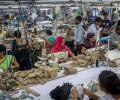
While the move may give a competitive edge over rivals like Bangladesh in the global market, several industry bodies raised concerns that many state governments may not implement it on the ground.

NITI Aayog Member Rajiv Gauba has detailed an extensive deregulation agenda, moving India towards a 'permitted unless prohibited' principle to dismantle new forms of the Licence Raj and clear 'regulatory cholesterol' for businesses.

If TVK MLAs and ministers are perceived as clean, or demonstrably cleaner than their predecessors, the credibility dividend will be enormous. The voter will feel rewarded, points out Ramesh Menon.
India's exports in January dipped by 6.58 per cent to $32.91 billion, as against $35.23 billion in the same month last year, according to the data released by the commerce ministry on Wednesday. Trade deficit in January stood at $17.75 billion.
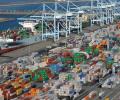
India's exports contracted 12.2 per cent to $34.48 billion in December 2022, mainly due to global headwinds, and the trade deficit widened to $23.76 billion during the same period, according to official data released on Monday. Imports in December 2022 also declined 3.5 per cent to $58.24 billion as against $60.33 billion in the year-ago period. In December 2021, exports stood at $39.27 billion and the trade deficit was at $21.06 billion.

The interim free trade agreement between India and Australia will come into force on Thursday, providing duty-free access to thousands of domestic goods such as textiles, and leather in the Australian market. The agreement will help almost double the bilateral commerce to $45-50 billion in around five years, according to exporters and industry players. The Economic Cooperation and Trade Agreement (ECTA), which was signed on April 2, would provide duty-free access to Indian exporters of over 6,000 broad sectors, including textiles, leather, furniture, jewellery and machinery in the Australian market.
.jpg)
The ball is now in the Reserve Bank of India's court to lift up demand, says Ajay S Shriram.

Spiraling steel prices led the government to cut customs duty by 2.5-5.5 per cent on a range of products from semi-finished to flat and long products for the benefit of MSMEs, that have been at the receiving end.

Presenting the Narendra Modi government's maiden Rail Budget, Railway Minister Sadananda Gowda announced setting up of logistic parks and private freight terminals on PPP model.

'The manufacturing sector and the capital goods industry need all the support that the government can provide, because they are working in a global market where trade restrictions are coming down every day,' says Amar Kaul.

'Rahul inspired Indian industry with an ethos, an ethos of being more confident, more independent, more thorough, more competitive, more generous, more public-spirited, and more national and more international all at once,' remembers Naushad Forbes.

'I found it unbelievable that L&T said 45,000 jobs were waiting to be filled because of unavailability of suitable skillsets.' 'So, when the Opposition sweepingly says there are no jobs, I'm sorry... I'm not saying it's raining jobs, but there are jobs. The (skill) gap has to be bridged.'

The dust over the controversy around foreign direct investment (FDI) in the defence sector appears to have settled.
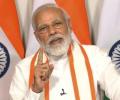
Speaking at industry association CII's annual session, PM Modi said the government has taken tough steps to fight the coronavirus pandemic and has also taken care of the economy. "On the one hand we have to safe the lives of our people and on the other hand we have to stabilise the economy and speed up the economy," he said. "Yes, we will definitely get our growth back," he asserted.

However, in recent times, the clout that trader bodies such as CAIT and other organisations like Swadeshi Jagran Manch and Laghu Udyog Bharati has is steadily increasing. Earlier this year, trader bodies were able to convince the government not to extend the deadline for implementation of the new norms in FDI policy on e-commerce.
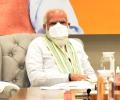
'I would like to convey the message to your readers that the prime minister himself is directly seized of the situation on the ground. He periodically reviews the situation on the ground and how it is moving forward, taking inputs from economists, business leaders, chambers of commerce.'

While asserting that the growth of coronavirus cases in the country has been more or less linear and not exponential, it also said testing has been ramped up consistently.
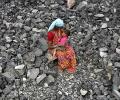
A bill to auction coal mines is also likely to be passed later.

Happy at the clear mandate given by voters to the BJP-led NDA, India Inc on Friday exuded confidence that Narendra Modi will initiate bold and decisive policy reforms to promote economic growth.

The time the companies have to get ready for GST is 6 to 12 months.
